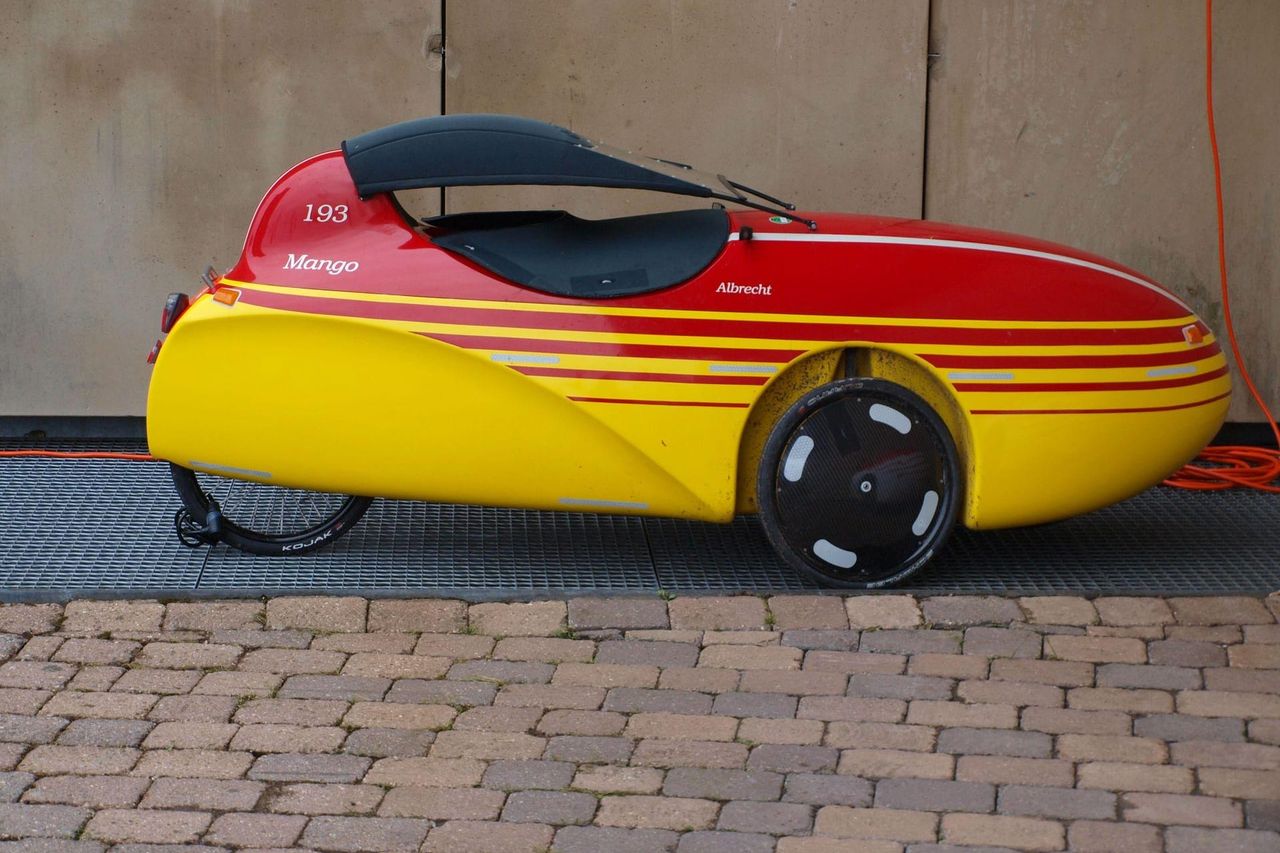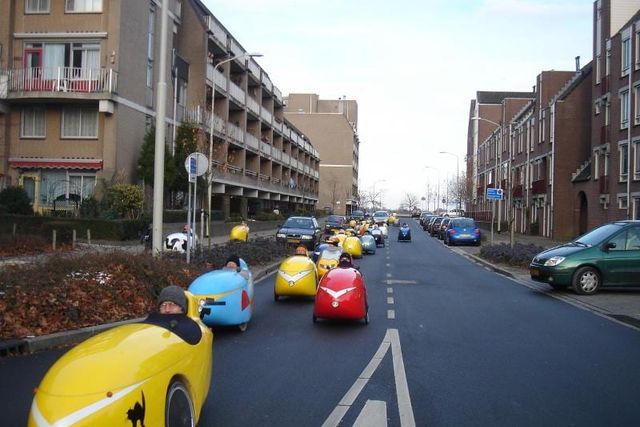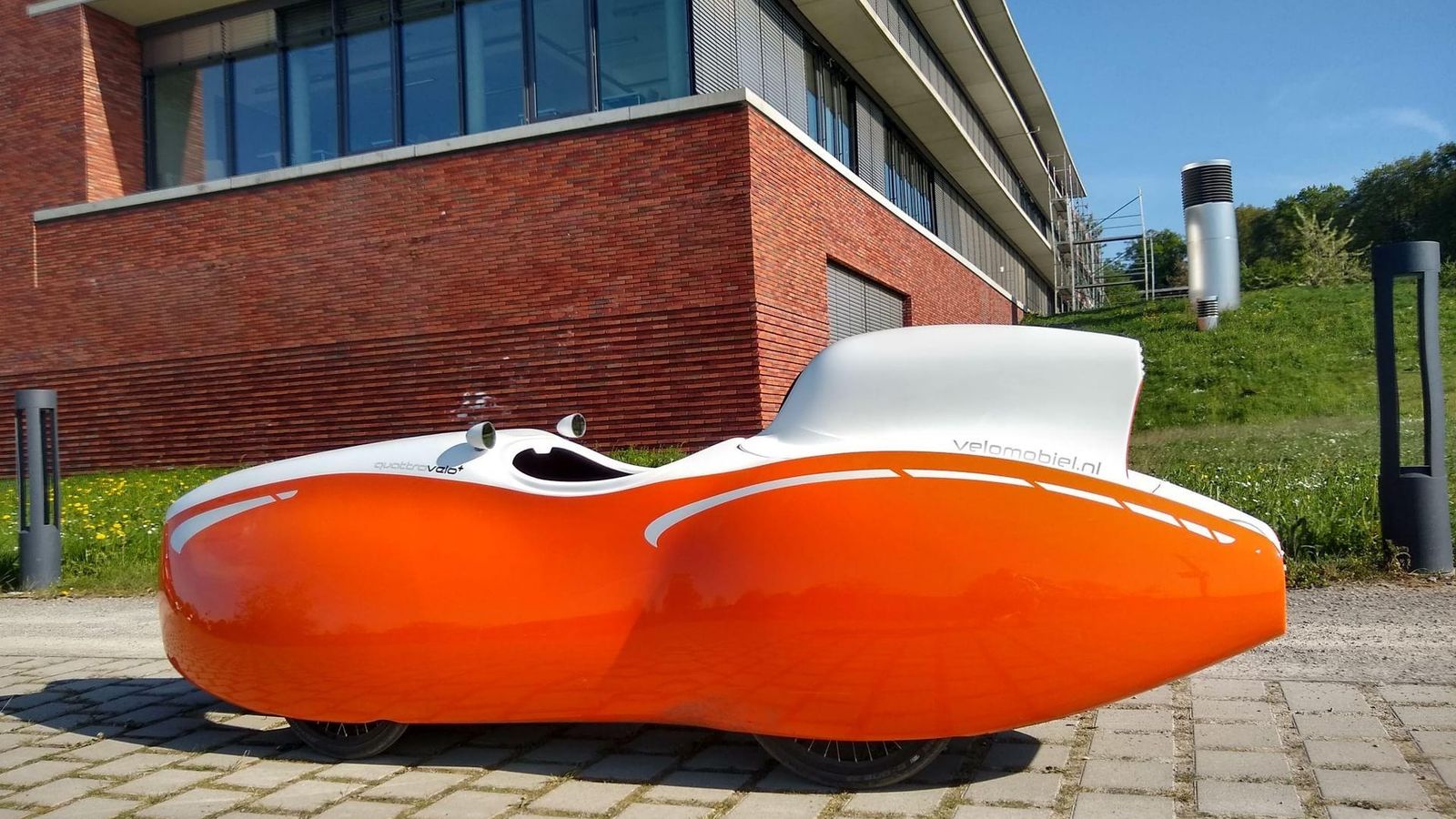
A velomobile is a human-powered vehicle (usually a reclining tricycle) enclosed in a lightweight, aerodynamic shell. You pedal it like a bike, but the shell protects you from rain and wind and cuts air resistance so much that you can cruise at 30–50 km/h on flat roads with the effort of a gentle ride. Some models add electric assist.
The name joins the French vélo (bicycle) with mobile, as in automobile. Riders also call it a velo, a velomobiel (Dutch) or a bicycle car.
In this guide you will learn how a velomobile works, how fast it really goes, who it suits, what it costs and where to try one in Europe.
In short:
- What it is: a recumbent trike (or quad) with a full or partial body shell
- Speed: about 30–50 km/h on the flat for a fit rider; electric-assist models are limited to 25 km/h of assistance in the EU
- Weight: roughly 20–40 kg for pedal-only models
- Price: about €6,000–€15,000 new; less used or as a kit (see our price guide)
- Best for: commuting 10–40 km a day, touring, and riding year-round in any weather
How does a velomobile work?
A velomobile works like a recumbent tricycle with a body around it. You sit reclined with your legs forward, push the pedals, and a chain drives one rear wheel. You steer with a tiller or two side levers and brake with drum or disc brakes on the front wheels.
The parts that make it a velomobile:
- The shell (fairing): carbon fibre, glass fibre or aluminium. It gives the aerodynamics and the weather protection.
- The chassis: in most modern velomobiles the shell is the frame (monocoque), which keeps weight down.
- The drivetrain: standard bicycle parts — chain, derailleur or hub gears, cassette — with the chain running through tubes and over idlers, protected from dirt.
- The wheels: usually two at the front and one at the back (a "tadpole" layout); four-wheel models like the Quatrevelo also exist.
- Lights and signals: most come with headlights, brake lights and indicators built in.
Because the drivetrain uses ordinary bike components, much of the routine maintenance can be done by any good bike mechanic. Shell repairs and model-specific parts come from the manufacturer or a specialist (find one on our map).
How fast is a velomobile?
A velomobile is the fastest practical pedal vehicle on the road. According to Low-tech Magazine, holding 30 km/h takes about 79 watts in a velomobile against 271 watts on a normal bicycle. Riding flat out at 250 watts gives roughly 29 km/h on a bike and 50 km/h in a velomobile.
The trade-off is weight. At low speed and on steep climbs, 25–40 kg is felt. Velomobiles are fastest on flat and rolling roads, and slower than a light road bike up long hills.
| Vehicle | Typical cruising speed | Power needed for 30 km/h | Weather protection |
|---|---|---|---|
| City bike | 15–20 km/h | ~270 W | None |
| Road bike | 25–30 km/h | ~200 W | None |
| E-bike (EU) | 25 km/h (assist limit) | Motor-assisted | None |
| Velomobile | 30–50 km/h | ~80 W | Full or partial |
Road bike figure is an estimate; city bike and velomobile figures from Low-tech Magazine.
Velomobile vs bike vs e-bike vs car
A velomobile sits between a bicycle and a small car. It keeps the bike's low running cost and exercise, and adds the car's weather protection, stability and luggage space.
| Feature | Bicycle | E-bike | Velomobile | Car |
|---|---|---|---|---|
| Purchase price | €300–€3,000 | €1,500–€6,000 | €6,000–€15,000 | €15,000+ |
| Running cost | Very low | Low | Very low | High (fuel, insurance, tax, parking) |
| Rain and wind protection | No | No | Yes | Yes |
| Luggage | Small | Small–medium | Medium (shopping, laptop, panniers) | Large |
| Licence and insurance | No | No (EPAC) | No (pedal-only or EPAC) | Yes |
| Exercise | Yes | Some | Yes | No |
Types of velomobile
There are four main types, and the right one depends on how you ride:
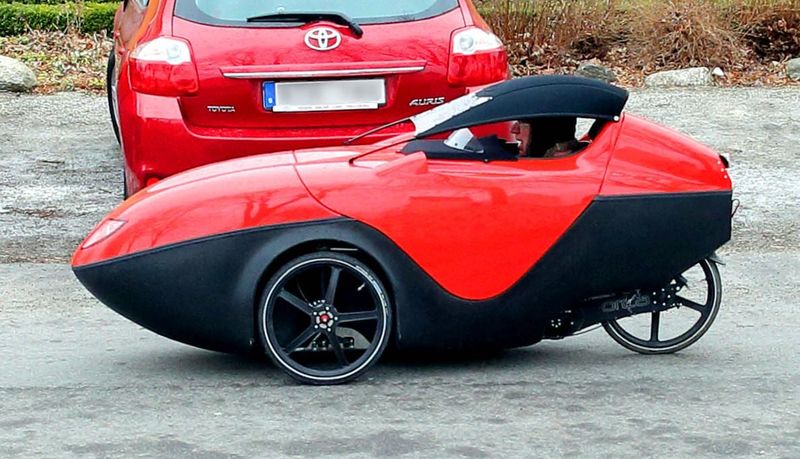
- Racing / high-performance: low, narrow and very light carbon shells built for speed and long distances. Examples: Milan, Bülk, Snoek.
- Everyday / commuter: a little higher and roomier, with easier entry and more luggage space. Examples: Quest (now succeeded by the Snoek L), Strada, Alleweder, WAW.
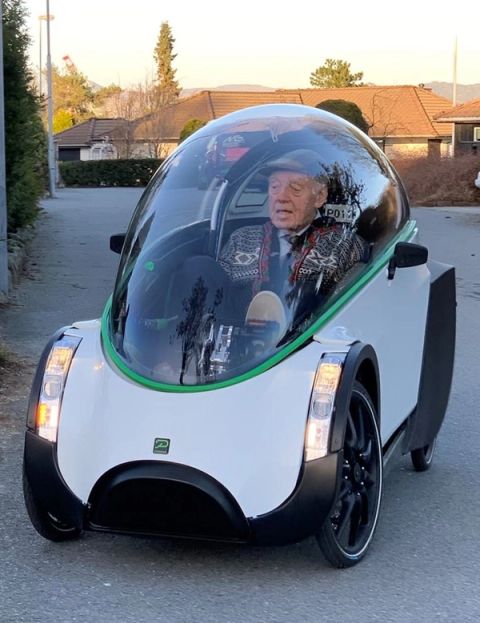
- Four-wheel: more stable and more cargo room, at the cost of some speed. Example: Quatrevelo.
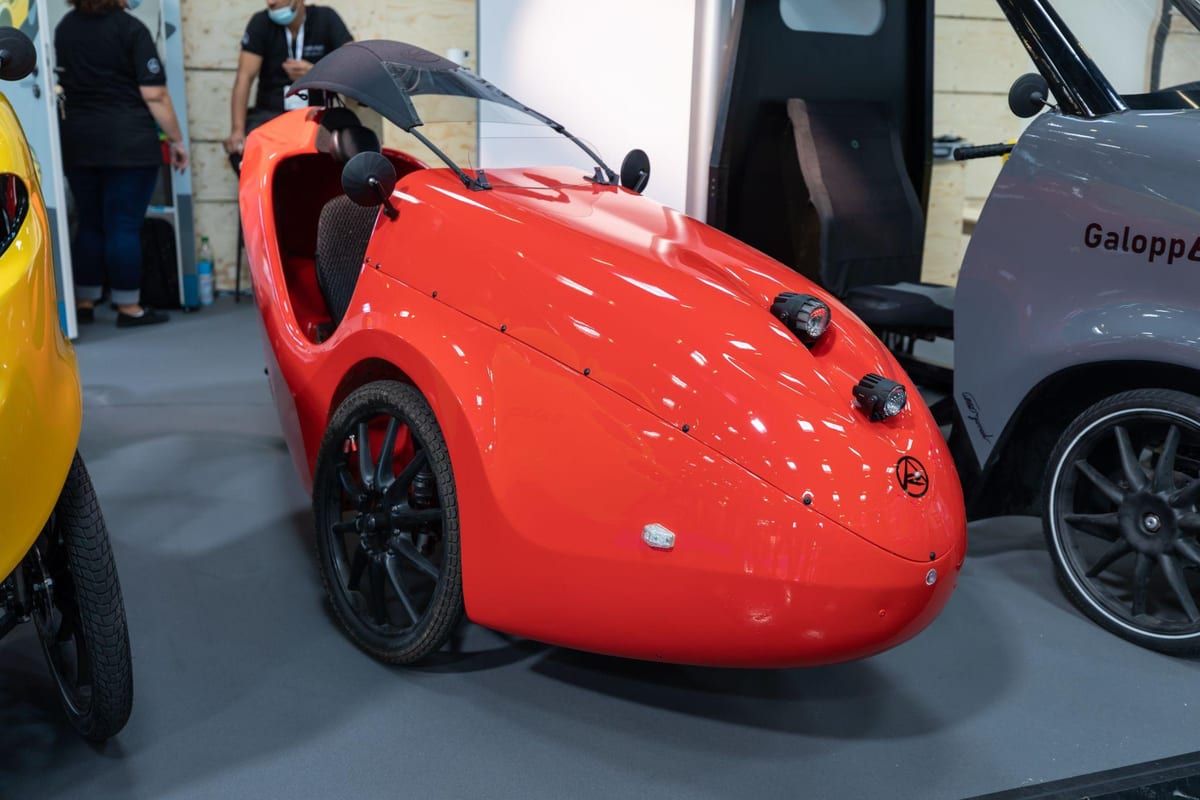
- Electric-assist (e-velomobile): either a classic velomobile with a motor added, or a purpose-built enclosed e-trike for the city. In the EU, assistance must cut out at 25 km/h for the vehicle to count as a bicycle (EPAC).
There are also kits, which you assemble yourself for a lower price, and open or half-open designs, where your head sticks out of the top.
Is a velomobile legal in Europe?
Yes. A pedal-only velomobile is a bicycle in EU countries: no licence, registration or insurance is required, and you ride it on roads and, where allowed, on cycle paths. An electric velomobile is also treated as a bicycle if it meets the EU's EPAC rules: motor up to 250 W, assistance only while pedalling, cutting out at 25 km/h. Faster electric models fall into moped categories and need type approval, registration and insurance.
Local rules on cycle-path width and trailer-style vehicles vary, so check your country's road code.
Are velomobiles safe?
Velomobiles are generally considered safer than an open bicycle in a fall or a minor collision, because the shell and the low centre of gravity protect the rider. The main risk is visibility: a velomobile sits lower than a car. Most riders add a flag, bright colours, strong lights and indicators, and they ride assertively in the lane.
Other things to know:
- Crosswinds can push lighter models on exposed roads.
- Heat builds up inside on hot days; vents and an open hood help.
- Entry and exit take practice, especially in narrow racing shells.
We cover this in depth in our upcoming safety guide.
Pros and cons of a velomobile
| Pros | Cons |
|---|---|
| 2–3× more efficient than a bicycle at speed | High purchase price |
| Rain, wind and cold protection | Heavy and wide to store and carry |
| Room for shopping or a laptop bag | Hard to park in small spaces or take on trains |
| No fuel, licence or insurance (pedal-only) | Few shops can service them |
| Stable: three wheels, no balancing | Heat inside in summer |
| Exercise on every trip | Lower visibility in traffic |
Who is a velomobile for?
A velomobile suits you if you:
- commute 10–40 km each way and want to replace a car or public transport;
- want to keep cycling through autumn and winter;
- ride long distances or tour with luggage;
- have back, neck or wrist pain on an upright bike (the reclined seat removes that load);
- want to avoid balancing on two wheels.
It is less suited to very hilly areas without electric assist, to dense city centres with no parking space, or to riders who need to carry a bike up stairs.
How much does a velomobile cost?
A new velomobile costs about €6,000 to €15,000 in Europe. Used models start around €2,000–€5,000, and kits cost less than a ready-to-ride vehicle. Electric assist adds about €1,000–€3,000. See the full breakdown, model by model, in our velomobile price guide.
A brief history of the velomobile
The first velomobiles appeared in France in the 1930s with Charles Mochet's Vélocar, which was banned from racing after it beat conventional bikes. The modern velomobile began in Denmark with the Leitra, designed by Carl Georg Rasmussen and in commercial production since 1983. In the 1990s and 2000s Dutch builders around Dronten — Flevobike, Alligt, Velomobiel.nl — turned the velomobile into a road vehicle, and the Quest became Europe's best-selling model with more than 1,000 units built. Today the largest producer is Velomobile World in Romania.
Where can I try a velomobile?
The best way to know if a velomobile is for you is a test ride. Most dealers and manufacturers in the Netherlands, Germany, Belgium, France and Austria offer one by appointment. Find the nearest one on the velomobile.eco map of dealers, spare-part shops and repairers in Europe.